On 2 March 2026, the team from Panemu conducted a strategic visit to one of its long-standing partners, PT Merdeka Copper Gold Tbk, at their Surabaya branch. The visit marked another important milestone in a collaboration that has been ongoing since 2019, focusing on strengthening data governance, improving operational reliability, and ensuring the long-term sustainability of material master data management within the mining industry.
The primary purpose of the visit was to present and discuss the 2025–2026 semester report for Daily Cataloguing activities, while also reaffirming the shared commitment between both organizations to continuously enhance the systems and processes that support critical operational functions. Beyond the presentation itself, the meeting served as an opportunity to reflect on the evolution of the partnership, evaluate ongoing initiatives, and explore future improvements that will further strengthen the effectiveness of the cataloguing ecosystem.
A Partnership Built on Trust and Long-Term Vision
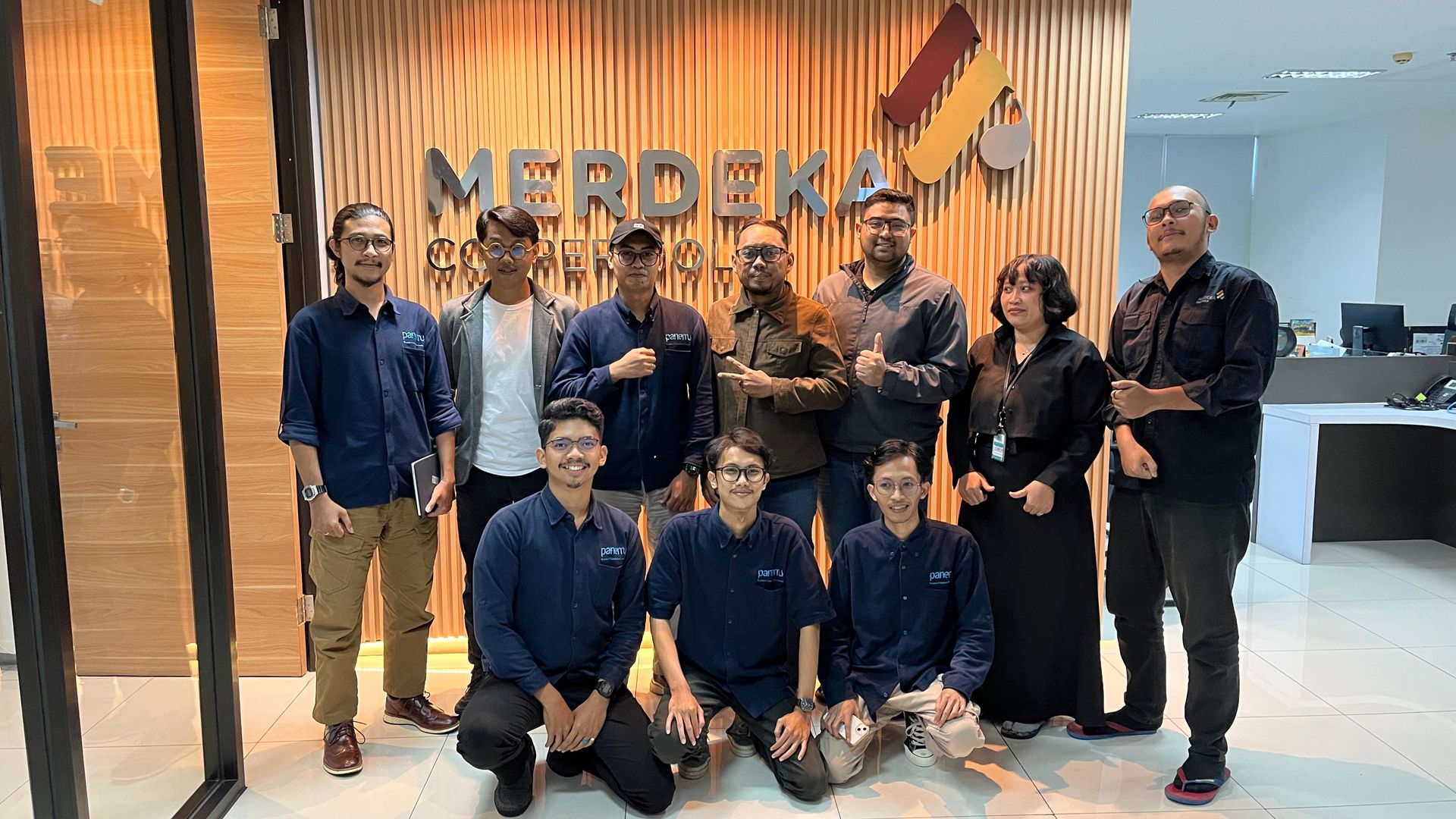
The collaboration between Panemu and Merdeka Copper Gold Tbk began in 2019, when Panemu was entrusted with the development of a Material Cataloguing Standardization framework and the implementation of the Spares Cataloguing System® (SCS®). At the time, the objective was clear: create a reliable, structured, and scalable approach to managing material master data that could support the operational complexity of a modern mining company.
Material cataloguing is often perceived as a purely administrative task. However, in industries such as mining—where thousands of spare parts, equipment components, and consumables must be tracked and managed across multiple operational sites—structured and standardized material data becomes a fundamental operational asset.
Recognizing this challenge, Panemu worked closely with Merdeka Copper Gold Tbk to design and implement a framework that would not only organize material data but also improve its consistency, governance, and usability across operational systems.
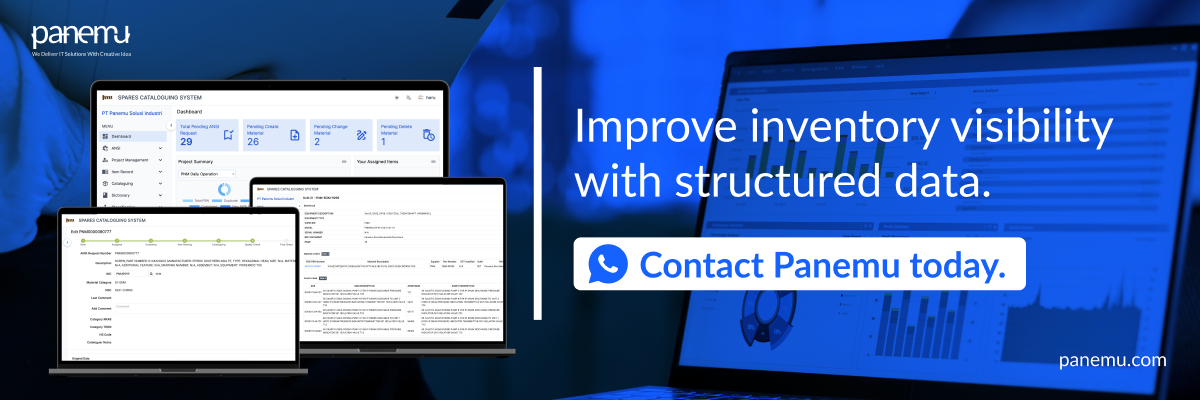
The implementation of the Spares Cataloguing System (SCS) marked the first phase of this transformation. The system was designed to support standardized item descriptions, eliminate duplicate records, and ensure that every material item within the database adhered to a defined cataloguing structure.
From the outset, the collaboration was built not only on technical implementation but also on a shared understanding that data governance is a continuous journey rather than a one-time project.
The Evolution of the Spares Cataloguing System
Since its initial implementation in 2019, the Spares Cataloguing System has undergone continuous improvements and refinements. As operational requirements evolved and new challenges emerged, the system was progressively enhanced to better align with real-world operational needs.
Over the years, several key developments have shaped the evolution of the system:
1. System Customization
Every organization has unique operational characteristics. As Merdeka Copper Gold expanded its operations and refined its internal processes, Panemu worked closely with their teams to customize the system accordingly.
These customizations ensured that the cataloguing framework remained relevant to the specific workflows and operational environments within the company.
2. ERP Integration
One of the most significant developments in the collaboration was the integration of the Spares Cataloguing System with enterprise resource planning (ERP) platforms used by the organization.
This integration enabled material master data to flow seamlessly across operational systems, supporting processes such as:
- Procurement
- Inventory management
- Maintenance planning
- Supply chain coordination
By ensuring that material data remains standardized and consistent across platforms, the integration helps reduce errors, improve traceability, and increase overall operational efficiency.
3. Continuous System Improvement
Technology implementation alone does not guarantee long-term success. What truly sustains a system is the ability to continuously improve it in response to real operational feedback.
Throughout the years, Panemu and Merdeka Copper Gold teams have worked collaboratively to evaluate system performance, identify improvement opportunities, and implement enhancements that address emerging operational needs.
These improvements have included:
- Optimization of cataloguing workflows
- Enhancement of data validation rules
- Refinement of classification structures
- Strengthening governance mechanisms
This iterative approach ensures that the system remains aligned with operational realities rather than becoming a static or outdated solution.

The Role of Daily Cataloguing Activities
While systems and frameworks form the backbone of data management, the true strength of the cataloguing process lies in daily operational activities.
Behind every accurate material record is a series of meticulous tasks carried out by dedicated teams. These tasks include reviewing new material requests, verifying technical specifications, standardizing item descriptions, classifying materials correctly, and ensuring that all records meet established cataloguing standards.
Panemu continues to provide operational support in these daily cataloguing activities, working alongside Merdeka Copper Gold teams to maintain the integrity of the material master database.
This work involves:
- Reviewing and standardizing incoming material requests
- Preventing duplicate item creation
- Ensuring correct classification and naming conventions
- Maintaining consistency across material records
- Supporting governance and compliance requirements
Although these tasks may appear routine, their impact on operational performance is significant.
Why Material Master Data Matters in Mining Operations
In complex industries such as mining, material master data is far more than a database entry. It forms the foundation of several critical operational processes.
Inventory Management
Accurate material data enables organizations to maintain precise inventory records. Without standardized descriptions and classifications, the same item could be recorded multiple times under different names, leading to stock discrepancies and inefficient warehouse management.
Procurement Efficiency
When procurement teams rely on clear and standardized material data, they can quickly identify the exact items required for operations. This reduces procurement delays and ensures that purchasing decisions are based on reliable information.
Maintenance Reliability
Mining operations rely heavily on equipment uptime. Spare parts must be available at the right time and in the correct specifications to support maintenance activities.
Well-managed cataloguing systems ensure that maintenance teams can locate and request the correct components quickly, reducing downtime and operational disruption.
Supply Chain Transparency
Reliable material data enhances visibility across the supply chain, enabling better forecasting, planning, and coordination between departments.
In short, material master data is a critical component of operational resilience.
Presenting the 2025–2026 Semester Report
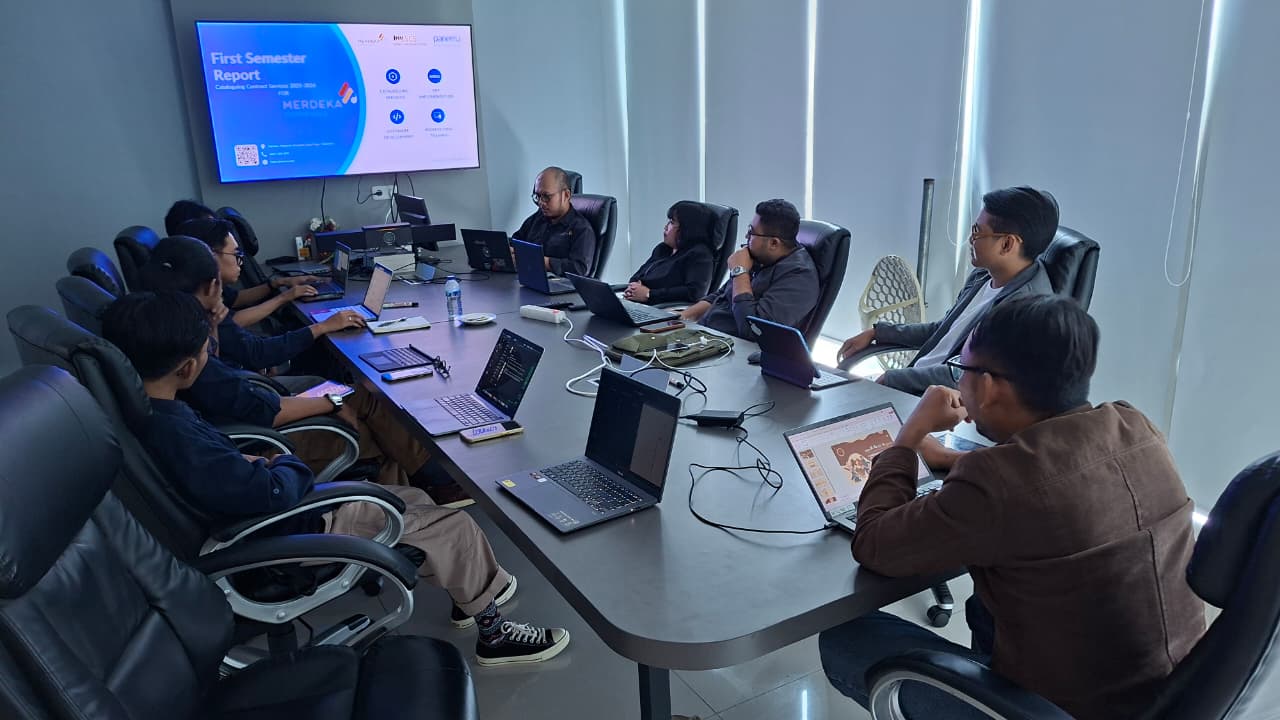
During the March 2026 visit, the Panemu team presented the 2025–2026 semester report for Daily Cataloguing activities, providing insights into the progress and outcomes of ongoing cataloguing operations.
The report covered several key areas:
- Volume of cataloguing activities completed during the semester
- Improvements in data accuracy and consistency
- Progress in duplicate reduction and data cleansing
- Operational support provided to internal departments
- Recommendations for further enhancements
The discussion surrounding the report allowed both teams to review achievements, address operational challenges, and identify opportunities for continued improvement.
These conversations are essential in ensuring that cataloguing activities remain aligned with the organization’s broader operational objectives.
Beyond Technology: The Human Collaboration
Although the partnership between Panemu and Merdeka Copper Gold involves advanced systems and structured frameworks, what truly defines the collaboration is the people behind the work.
The success of cataloguing initiatives depends heavily on communication, shared understanding, and collaboration between teams.
Over the past several years, professionals from both organizations have worked closely together to:
- Align technical frameworks with operational workflows
- Resolve data challenges in real time
- Develop practical solutions to complex cataloguing issues
This ongoing interaction has created a collaborative environment where knowledge and experience are continuously exchanged.
Such relationships play a vital role in ensuring that systems remain effective and adaptable.
Appreciation for Long-Term Trust
During the visit, Panemu expressed its sincere appreciation for the trust that Merdeka Copper Gold Tbk has placed in the company over the years.
Long-term partnerships of this nature are built on consistent performance, transparency, and shared commitment to improvement.
Since the start of the collaboration in 2019, both organizations have demonstrated a strong willingness to work together in addressing complex data management challenges.
This spirit of collaboration has enabled the partnership to evolve beyond a traditional client-vendor relationship into a strategic operational partnership.
Data Governance as a Continuous Journey
One of the central themes highlighted during the meeting was the concept that data governance is not a one-time implementation.
Instead, it is an ongoing process that requires:
- Continuous monitoring
- Regular evaluation
- Adaptive improvements
- Strong operational discipline
As organizations grow and operational environments evolve, data systems must also adapt to new requirements.
The work carried out through daily cataloguing activities, system enhancements, and governance initiatives ensures that the material master database remains reliable and relevant over time.
This long-term perspective is essential for sustaining operational efficiency in industries that rely heavily on accurate data.
Looking Ahead
As the collaboration moves forward, Panemu remains committed to supporting Merdeka Copper Gold Tbk in strengthening its data governance and cataloguing capabilities.
Future initiatives may include:
- Further automation within cataloguing workflows
- Advanced data validation mechanisms
- Expanded analytics for material data utilization
- Enhanced integration across operational platforms
By continuing to innovate and collaborate, both organizations aim to ensure that the cataloguing ecosystem remains robust, scalable, and aligned with operational needs.
The visit on 2 March 2026 represents another meaningful chapter in the ongoing collaboration between Panemu and Merdeka Copper Gold Tbk.
What began in 2019 as a project to implement a cataloguing framework and system has evolved into a long-term partnership focused on data accuracy, operational reliability, and continuous improvement.
While systems and technologies play an important role, the true value of the collaboration lies in the consistent daily work carried out by dedicated teams who ensure that material data remains accurate, structured, and governed.
In industries where operational precision is critical, such work may not always be visible—but its impact is profound.
Panemu is proud to continue this journey alongside Merdeka Copper Gold Tbk, working together to strengthen data governance and support the operational excellence that modern industries require.
Because ultimately, data governance is not a destination.
It is a continuous journey.