In many large industrial organisations, the same spare part may be recorded differently across departments. Maintenance refers to it using one description, procurement uses another, and warehouse teams may adopt yet a third format. While each department believes it is managing its operations accurately, this divergence creates hidden inefficiencies, miscommunication, and operational delays.
Fragmentation of material data is more than a technical inconvenience; it has direct consequences on decision-making, cost control, and asset reliability. When departments are not aligned on material references, the system appears to work, yet real coordination suffers.
How Data Fragmentation Occurs
Fragmentation arises for several reasons:
- Independent record creation: Each department creates or updates material records according to its own conventions.
- Multiple legacy systems: Mergers, system upgrades, and site-specific solutions lead to incompatible datasets.
- Inconsistent naming conventions: Technical terms, abbreviations, and local language variations make the same item appear different across functions.
- Manual overrides and custom coding: Users often bypass standard processes for expediency, creating temporary but persistent discrepancies.
Over time, these small divergences accumulate, making cross-functional coordination a challenge. Even when ERP or inventory systems are in place, each department effectively operates on its own reference frame.
Operational Consequences of Divergent References
The impact of fragmented material data can be observed in several operational areas:
Department | Issue | Operational Impact |
Maintenance | Cannot identify correct part | Delays in work orders, increased downtime |
Procurement | Reorders existing stock | Excess inventory, higher costs |
Warehouse | Stock misplacement | Difficulty locating parts, increased search time |
Finance | Misaligned valuation | Discrepancies in reporting and audits |
According to research by Aberdeen Group, organisations with poor master data coordination experience up to 25% higher operational costs due to unnecessary stock, delays, and emergency procurement.
Case Example: Emergency Purchase Loops
Consider a scenario where a critical pump seal is listed differently in maintenance and procurement systems. Maintenance requests it under its technical name, but procurement cannot match the reference in the system. Unable to verify existing stock, procurement places an emergency order. Meanwhile, warehouse staff may have the correct part but cannot reconcile the codes, causing duplication and further confusion.
This loop is costly, wastes time, and reduces trust in organisational processes. Fragmentation of material data is often the hidden root cause behind repeated emergency purchases and inefficiencies.
How Data Fragmentation Hinders Decision-Making
Fragmented material references reduce visibility and accountability. Decision-makers may see sufficient inventory on paper, but in reality, critical items are misaligned. Departments are forced to act on incomplete or misleading data:
- Procurement may over-purchase to compensate for uncertainty.
- Maintenance schedules are delayed due to unconfirmed availability.
- Warehouse staff spend extra hours verifying stock before issuance.
According to a study by IBM, poor data management in operationally intensive industries can reduce overall productivity by 10–15% annually, much of which stems from fragmented reference data.
Strategies to Align Cross-Functional Material Data
To reduce these inefficiencies, organisations need a unified approach to material master data:
- Centralised material cataloguing: A single source of truth for all departments.
- Standardised naming and classification: Uniform formats across sites and systems.
- Regular audits and reconciliations: Detect and resolve discrepancies proactively.
- Governance and ownership: Assign data stewards to oversee compliance and updates.
- Integration across systems: Ensure ERP, maintenance, procurement, and warehouse systems share the same master data.
Benefits of Alignment
- Faster maintenance execution
- Reduced emergency procurement and excess stock
- Improved financial reporting accuracy
- Enhanced interdepartmental collaboration
Panemu as a Partner for Data Alignment
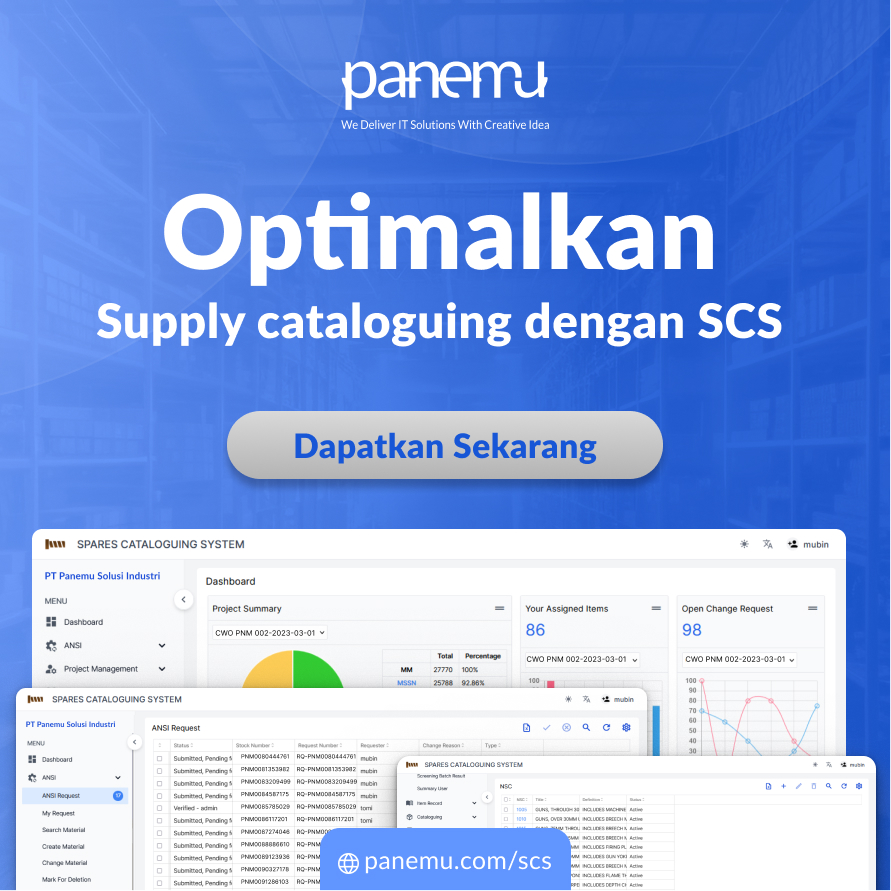
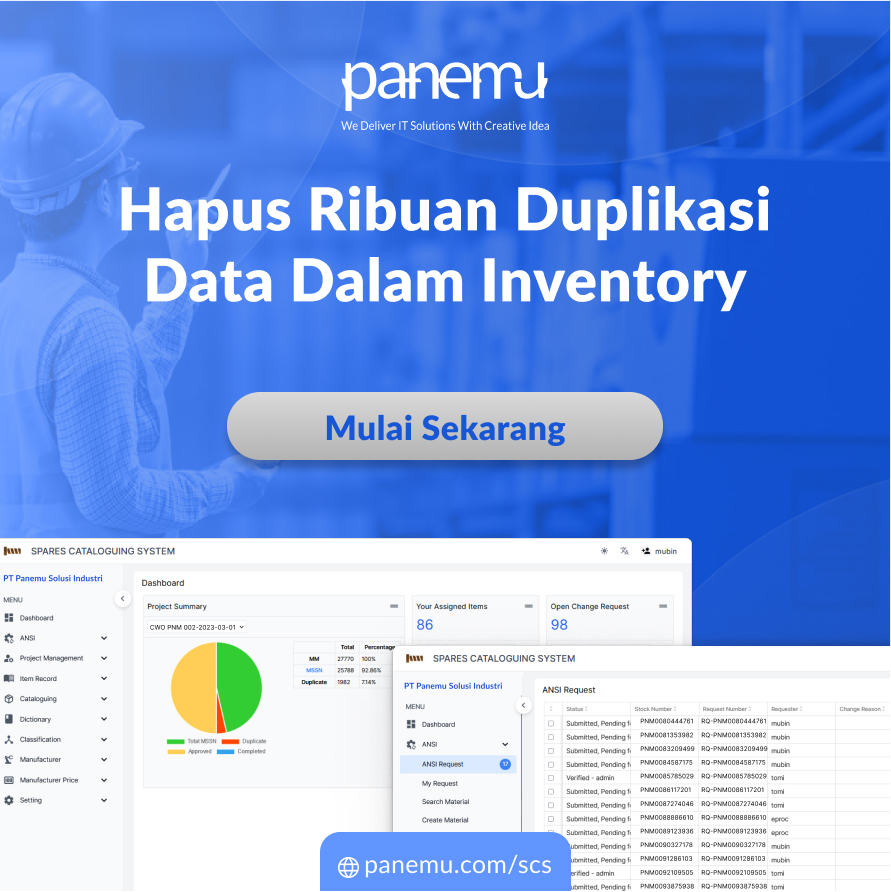
Many organisations plan to implement material cataloguing internally, but creating and sustaining a skilled in-house team is complex and resource-intensive. Partnering with Panemu provides a ready-trained, experienced team capable of standardising, cleansing, and governing material data across all departments.
By collaborating with Panemu, companies can:
- Achieve faster alignment across maintenance, procurement, and warehouse teams
- Reduce costs associated with duplicated efforts and emergency purchases
- Free internal resources from the burden of recruiting and training cataloguing professionals
- Establish a sustainable governance framework to prevent future fragmentation
Turning Fragmented Data into a Coordinated Asset
Fragmented material references are not just a technical issue — they are a source of inefficiency, miscommunication, and cost. Organisations that fail to address these inconsistencies risk delays, overstock, and unreliable operations.
Panemu helps organisations bridge the gap between departmental data silos, transforming fragmented material information into a unified, actionable, and reliable foundation. This ensures operational readiness, financial efficiency, and strategic control over spare parts management, making inventory truly support day-to-day operations.