If you're an IT Director responsible for an asset-intensive operation, here's the scenario that should already be in your risk register: your master data system goes dark at 09:14 on a Monday morning. By 09:30, maintenance teams cannot identify spare parts on work orders. By 11:00, procurement cannot issue POs because vendor and material codes don't resolve. By end-of-day, the plant is operating on tribal knowledge and paper workarounds. How long until full recovery? In most organisations, the honest answer is "we don't know" — because their master data platform has no documented Recovery Point Objective, no contracted Recovery Time Objective, and no quarterly-tested recovery playbook. The Panemu Spares Cataloguing System® (SCS®) was engineered to a different standard from Day 1: RPO 1 hour, RTO 4 hours, contractually committed, quarterly tested, geo-redundant. If your current master data platform cannot match that specification, you are carrying an operational risk that your corporate insurance, your statutory auditor, and your board will all eventually ask uncomfortable questions about. Engage Panemu now.
Master Data Is an Enterprise Asset — Treat Its DR Accordingly
There is a category error that has persisted in IT departments for too long: master data is treated as reference data, and reference data is treated as low-priority for disaster recovery. The result is that material masters, vendor masters, equipment registers, and BOMs sit on infrastructure with weaker DR specifications than the transactional systems that depend on them.
This is upside-down thinking. Transactional systems can be reconstructed from journal logs, from paper trails, from upstream systems, given enough time. Master data, once lost or corrupted, has no upstream source — it is the source. When a material master goes down or gets corrupted, every dependent system — ERP, CMMS, e-procurement, BI, supplier portals — operates on stale cached copies until the master is restored. The longer the outage, the more divergence accumulates across the dependent systems, and the more expensive the eventual reconciliation becomes.
For an asset-intensive operation — a mine, a power plant, an oil & gas facility, a heavy manufacturing site — master data outage translates directly into operational paralysis. Maintenance teams cannot raise work orders against parts they cannot identify. Stores cannot issue against codes that don't resolve. Buyers cannot create POs against vendors that have temporarily disappeared. Plant managers operate on the most expensive default in industrial operations: stop, wait, hope. The downstream cost runs into the tens of thousands of dollars per hour at modest operations and into the hundreds of thousands of dollars per hour at large ones.
This is why master data DR specification is not an IT housekeeping matter — it is a business continuity priority that should be reviewed at executive level. And it is why SCS® was architected with enterprise-grade DR as a foundational requirement, not as a feature added under customer pressure.
If your current master data platform cannot show you a written DR specification, a tested recovery playbook, and a quarterly test log — you have a continuity gap that needs to be closed before the next BCP audit. Engage Panemu now. Our SCS® enterprise engagements for the coming quarter are filling, and DR remediation is not a project you want to compress under audit pressure.
What RPO 1 Hour and RTO 4 Hours Actually Mean
The DR vocabulary is often used loosely. Let me be precise about what these specifications mean in operational practice, because the precision matters for any IT Director benchmarking platforms.
Recovery Point Objective (RPO). The maximum amount of data loss your organisation will tolerate, measured in time. RPO 1 hour means: in the worst-case disaster scenario, you will lose no more than one hour of transactions. Any master data changes, vendor updates, or workflow approvals committed within the hour immediately before the disaster may be lost; everything older is recoverable. The shorter the RPO, the more frequent the backup or replication cycle must be — and the more expensive and complex the infrastructure.
Recovery Time Objective (RTO). The maximum acceptable duration of an outage, measured from disaster onset to full service restoration. RTO 4 hours means: from the moment the disaster is declared, normal SCS® service will be available again within 4 hours. This includes failover execution, data integrity validation, user access restoration, and cutover communication. The shorter the RTO, the more sophisticated the failover architecture must be — and the more frequently it must be exercised to remain credible.
RPO 1 hour combined with RTO 4 hours is an enterprise-grade specification. It puts SCS® in the tier of platforms expected by Tier-1 mining houses, large IPPs, global EPC contractors, and multinational manufacturers with mature BCP programmes. It is significantly stronger than the de-facto specification many organisations discover, after their first DR test, that their existing master data platform actually delivers — which is often RPO 24 hours and RTO 48 hours, or worse.
The gap between "RPO 1 / RTO 4" and "RPO 24 / RTO 48" is not academic. It is the difference between recovering in time for the afternoon shift versus losing two days of operations and absorbing the corresponding cost. For an operation losing USD 50,000 per hour of master data downtime, the gap is USD 2.2 million per disaster event.
How SCS® Delivers the Specification — The Technical Architecture
Specifications without architecture are marketing. Let me walk through how SCS® actually delivers RPO 1 / RTO 4 in production, because IT Directors deserve to see the engineering, not just the slogan.
Incremental backup on hourly cadence. SCS® performs incremental database backups every hour of operation, capturing every change committed since the last incremental. The incremental window is what bounds the RPO — in the worst-case scenario of disaster striking immediately before the next scheduled incremental, the maximum data loss is bounded at one hour. Incrementals are captured with full transaction-log integrity, not just snapshot copies, so point-in-time recovery within the window is achievable.
Full backup on daily cadence. A complete database backup is captured daily, typically during the lowest-utilisation window. The full backup serves as the recovery base against which incrementals are replayed. Retention of full backups follows enterprise standards — typically 30 days online, 90 days near-line, 7 years archive depending on regulatory requirements — and the retention schedule is configurable to your organisation's policy.
Geo-redundant storage for cloud deployments. For SCS® cloud and hybrid deployments, backup storage is geo-redundant across at least two physically separated regions. A regional disaster — datacenter loss, regional infrastructure failure, broad network event — does not result in backup loss. The secondary region is configured for active failover, not just cold storage, which is what enables the RTO 4 commitment.
Documented recovery playbook, quarterly tested. A specification is only as credible as the playbook that exercises it. SCS® recovery procedures are documented step-by-step — from disaster declaration through service restoration — with named roles, sequenced actions, validation checkpoints, and communication templates. The playbook is exercised quarterly through scheduled DR drills, with timing measured against the RPO/RTO commitment. Drill outcomes are logged, gaps remediated, and the playbook revised. This is the layer that distinguishes credible DR from theoretical DR.
Encryption at rest and in transit. All backups, replicas, and recovery streams are encrypted using enterprise-grade protocols. Encryption key management is segregated from data storage, with key rotation policies aligned to ISO 27001 controls. For organisations subject to UU PDP, GDPR, or sector-specific privacy regulations, the encryption and key management architecture meets the technical safeguards required.
Audit trail for every recovery event. Every backup, every restore, every failover test produces an auditable log entry. When your statutory auditor asks for evidence that the DR specification is actually delivered, the answer is the log — not a project manager's recollection. This is the layer your audit committee will examine first.
The SCS® Module Stack Behind the DR Specification
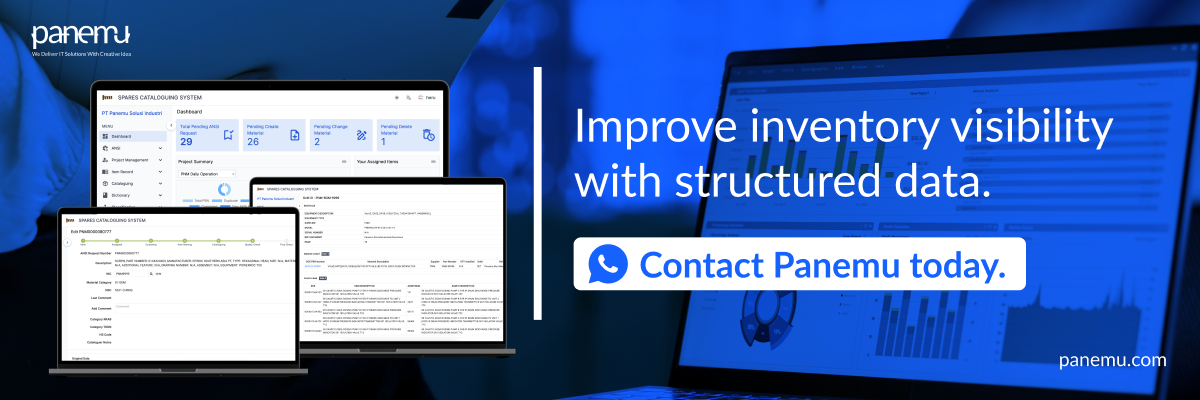
The DR specification isn't a standalone capability bolted onto a generic database. It is a property that emerges from SCS®'s architectural design — and the same architecture delivers the productivity, governance, and integration outcomes that make SCS® the platform of choice for asset-intensive master data. Let me walk through how the broader module stack interacts with the DR layer.
Master Data Management Module. SCS®'s core MDM module is built on a transactional architecture engineered for high-integrity change capture. Every commit to a material master, vendor master, or equipment register is structured as a transactional event with full attribution — user, timestamp, before/after values, justification. This change-capture discipline is what makes hourly incremental backup mathematically sound — incrementals can be replayed without ambiguity because every change is structured.
Search Engine and Normalization Engine. SCS®'s search engine and normalization engine are designed for stateless query execution against the persistent master, which means failover from primary to DR region requires no in-flight transaction reconstruction at the search layer. The architecture is what enables the 4-hour RTO commitment without compromising query consistency post-failover.
Duplicate Detection Module. Duplicate detection algorithms run against the canonical master state, with detection runs cached in a separate operational store that recovers independently from the master. This separation means DR recovery prioritises master state restoration first, with detection capabilities returning incrementally — a sequencing that compresses effective RTO for user-facing master data operations.
Classification and Workflow Modules. Classification taxonomies and workflow state machines are stored as versioned configurations alongside the master, recovered together. Pending workflow items at the moment of disaster are reconstructable from the transaction log, with users notified to confirm or reissue actions as part of cutover communication.
Reporting and Dashboard Layer. The reporting layer regenerates from the recovered master automatically post-failover. Historical reports remain accessible from backup; real-time dashboards begin refreshing against the recovered master immediately after RTO is achieved.
Integration Layer for ERP and CMMS. SCS® integrations with downstream ERPs (SAP S/4HANA, Oracle Fusion, Microsoft Dynamics, IFS, Odoo, others) and CMMS (Maximo, SAP PM, Oracle EAM) operate on a publish-subscribe model with replay capability. After failover, integrations resume from the last confirmed delivery point, with replay handling any in-flight messages. Downstream systems do not experience inconsistency — they experience a managed pause and resume.
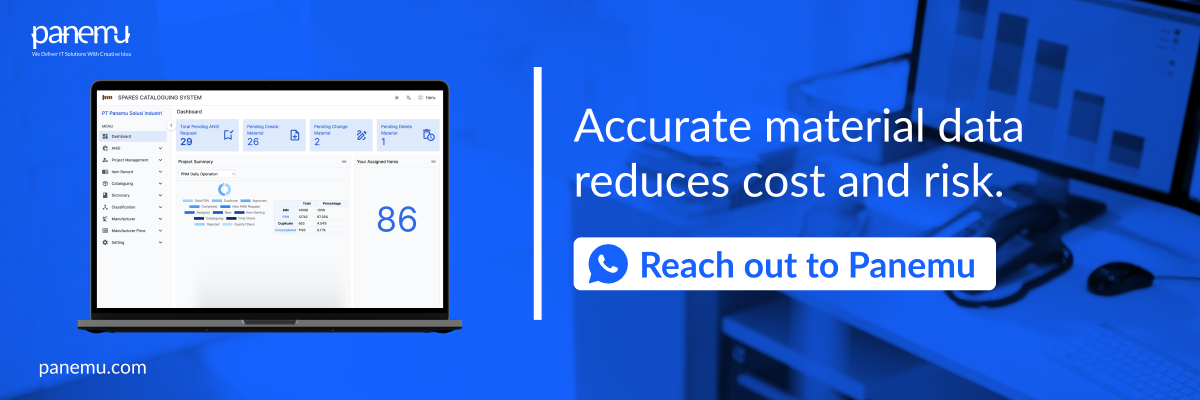
This module stack working together is what makes SCS® a credible enterprise master data platform with credible enterprise DR. Generic master data tools cannot replicate this because they weren't architected with these properties as foundational requirements. Explore SCS® key features to see the full architecture in detail.
Deployment Options That Meet Your DR Posture
SCS® supports the deployment configurations that real organisations require to meet their specific DR and policy contexts.
Cloud deployment runs on enterprise-grade infrastructure with the full RPO 1 / RTO 4 specification active by default. Geo-redundant storage, automated failover, quarterly DR drills, and audit-grade evidence generation are all baseline. This is the typical choice for organisations prioritising rapid deployment and managed operations.
On-premise deployment runs on your infrastructure with equivalent RPO/RTO capability, configured to your DR architecture. SCS® includes deployment guidance, replication configuration, and failover playbook templates that adapt to your existing infrastructure. This is the typical choice for organisations with data residency constraints, on-premise corporate IT policy, or specific regulatory requirements that limit cloud adoption.
Hybrid deployment combines on-premise primary with cloud DR, or vice versa. This pattern is increasingly common for organisations seeking on-premise control for production with cloud-grade DR economics. SCS® supports the configuration natively.
Licensing is structured around concurrent users, data volume, and module configuration. The DR capability is not a premium add-on — it is part of the platform baseline, because we believe master data platforms without enterprise DR shouldn't be sold to asset-intensive operators in the first place.
For organisations seeking accelerated implementation with methodology and execution support, our Cataloguing Service combines SCS® deployment with execution acceleration.
What Most Organisations Discover on Their First Honest DR Audit
Let me describe the scenario that plays out repeatedly when an IT Director — usually under pressure from a new corporate risk officer, an audit finding, or an insurance review — commissions an honest DR audit of their master data platform.
The audit team requests the documented RPO and RTO specifications. The IT team produces something, often a brief paragraph in a high-level BCP document. The specifications are weaker than expected — RPO 24, RTO 24 or 48 are common findings.
The audit team requests the recovery playbook. The playbook is either absent, outdated by 2+ years, or written at a level of detail that cannot actually be executed under pressure ("restore the database from backup" without specifying which backup, which restore point, which validation steps, which cutover sequence).
The audit team requests evidence of recent DR drills. The most recent drill, if one exists, is typically 18+ months old. The drill report shows the team missed the published RTO by a wide margin, with several action items that were never closed.
The audit team requests evidence of backup integrity. Backups exist, but nobody has tested whether they can actually be restored end-to-end in the past 12 months. In a meaningful fraction of cases, the audit reveals that backups have been failing silently for months — incremental chains broken, retention policies misconfigured, restoration scripts referring to decommissioned infrastructure.
The audit finding is uncomfortable. The remediation roadmap is 12–18 months. The corporate insurance underwriter, reviewing the same findings, increases premiums or adjusts coverage exclusions. The board's audit committee adds master data DR to its standing watch list.
Every quarter you operate with an unaudited master data DR posture, you accumulate this risk. The remediation cost only grows. The audit and insurance posture only weakens. Replacing the foundation with SCS® — which arrives pre-engineered to the RPO 1 / RTO 4 specification — closes the gap in months rather than in years of internal remediation against a platform that wasn't architected for the standard.
What Auditors, Insurers, and Corporate IT Policy Now Demand
The bar is rising fast, and not just because of risk best practice. Multiple regulatory and contractual forces are converging.
Statutory audit standards. External auditors increasingly include IT general controls reviews with explicit attention to data backup, recovery testing, and BCP exercise frequency. Findings that previously sat in the management letter as advisory comments now appear as significant deficiencies. For listed companies, these findings reach the audit committee with predictable consequences.
Cyber and operational insurance. Insurers are tightening underwriting criteria for operational technology and enterprise data systems. Premium and coverage decisions are increasingly tied to documented DR specifications, evidence of testing, and incident history. Organisations without enterprise-grade DR on their master data platform are seeing premium increases of 15–40% or finding coverage scoped down at renewal.
Corporate IT policy alignment. Parent companies are pushing standardised DR requirements down to subsidiaries and operating entities. RPO 1 / RTO 4 is increasingly the minimum standard for systems classified as Tier-1 enterprise critical — and master data platforms are increasingly classified that way.
Regulator expectations. In sectors where operational continuity has regulatory dimensions — power generation, water utilities, healthcare, public transport — regulators are explicit about BCP expectations including data system recovery. Indonesia's regulatory direction on critical infrastructure, like equivalent frameworks elsewhere, increasingly references quantitative DR specifications.
For an IT Director in an asset-intensive organisation, this convergence means master data DR is no longer a discretionary investment. It is a baseline requirement, and the only question is whether you meet it through a multi-year remediation programme on an existing platform — or through deployment of a platform that arrives at the standard. SCS® arrives at the standard.
Claim Your DR/BCP Brief Against Your Organisation's Policy — Now
Panemu offers qualified organisations a DR/BCP Review Session that maps the SCS® disaster recovery specification against your organisation's existing BCP policy and audit requirements. The session is delivered by our enterprise architecture team and produces a written brief — typically within 10 business days of the discovery call — covering:
A mapped comparison of SCS® RPO/RTO commitments against your corporate IT policy thresholds. Identification of any gaps where your existing master data platform falls short of the policy you are already supposed to comply with. A recovery playbook excerpt demonstrating exactly how SCS® executes against the published specification. A reference to test cadence, audit trail evidence, and insurance posture talking points your CRO and audit committee will expect. A deployment roadmap to bring your organisation onto the SCS® specification within a defined timeline.
DR/BCP review slots are limited each quarter to protect delivery quality. The IT Directors who claim slots now will have written briefs in hand before the next audit cycle. Those who wait will be presenting to the audit committee with whatever their current platform actually delivers — and increasingly, that conversation does not end well.
To explore the full SCS® architecture, the disaster recovery capability, the recovery playbook framework, the operational evidence, and to claim your DR/BCP review session, visit:
👉 Discover SCS® Key Features and Book Your DR/BCP Review
Contact our team this week. Master data downtime is not an outage your operation can afford, and DR remediation is not a project your audit timeline can absorb under pressure. SCS® is the only master data platform in the region engineered, contracted, and tested to RPO 1 / RTO 4 as a default specification. Book the review now. Close the continuity gap before the next audit cycle, the next insurance renewal, or the next regulatory inquiry forces you to.