Supply chain performance is often measured through lead times, supplier responsiveness, inventory availability, and planning accuracy. Yet many Supply Chain Managers overlook a factor that quietly influences all four: the quality and consistency of material master data.
When suppliers receive incomplete specifications, inconsistent descriptions, or conflicting material information, delays become inevitable. Clarification emails increase. Quotation cycles become longer. Purchase orders require additional verification. What appears to be a supplier performance issue is often a data quality issue that originated internally.
In contrast, organisations with clear, standardised, and stable material data create a far smoother operating environment for suppliers. Requests are understood faster, quotations are more accurate, and procurement cycles move with fewer interruptions. In many cases, stronger supplier collaboration begins long before a meeting, negotiation, or contract discussion. It starts with the quality of the material information being shared.
Why Material Data Consistency Matters to Suppliers
Every supplier depends on information to fulfil demand accurately. Regardless of whether they provide industrial consumables, mechanical components, electrical equipment, or critical spare parts, suppliers need precise specifications to deliver the correct item at the right time.
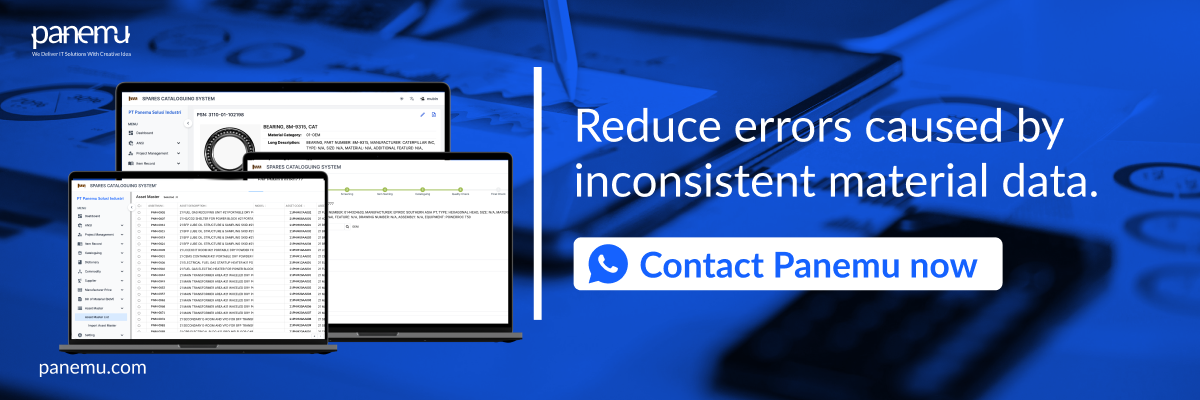
However, many organisations unknowingly create friction through inconsistent material master records. A bearing may be described one way in the ERP system, another way in procurement records, and differently again in historical purchase orders. Technical specifications may be incomplete. Units of measure may vary. Manufacturer references may be missing.
From the supplier's perspective, these inconsistencies create uncertainty.
When uncertainty exists, suppliers naturally seek clarification before proceeding. This additional communication may seem minor when viewed individually, but across hundreds or thousands of transactions, the cumulative impact becomes significant.
A Supply Chain Manager focused on improving material flow should recognise that supplier responsiveness is often directly linked to the quality of information being provided. The clearer the specification, the easier it becomes for suppliers to respond confidently and quickly.
Material data consistency therefore serves as an operational enabler. It reduces ambiguity, accelerates communication, and strengthens the overall efficiency of the procurement process.
The Hidden Supply Chain Costs of Inconsistent Material Information
The consequences of poor material master data extend far beyond administrative inconvenience. In many capital-intensive industries, inconsistent data creates measurable operational and financial costs.
Consider a maintenance-intensive operation where planners urgently require replacement components during a scheduled shutdown. Procurement issues a request to suppliers, but material descriptions are vague and lack technical detail. Suppliers respond with questions rather than quotations. Clarification cycles begin, valuable time is lost, and the shutdown schedule comes under pressure.
The same pattern appears across broader supply chain operations.
Longer Quotation Cycles. Suppliers require additional information before preparing accurate quotations. Procurement teams spend more time responding to clarification requests, extending sourcing timelines and delaying purchasing decisions.
Increased Expedite Costs. When procurement lead times expand because of unclear specifications, organisations often resort to expedited freight and urgent purchasing activities to meet operational requirements. These costs are rarely attributed directly to data quality, yet poor data is frequently the root cause.
Supplier Frustration. Repeated requests for clarification can strain supplier relationships. Suppliers prefer working with customers who provide accurate and consistent information because it reduces transaction costs and improves efficiency for both parties.
Inventory Planning Challenges. Inconsistent material records reduce visibility across inventory and purchasing systems. Demand signals become fragmented, making forecasting and replenishment planning less reliable.
Over time, these issues weaken supply chain performance and create unnecessary complexity. The organisation may invest heavily in supplier development programmes or procurement optimisation initiatives while overlooking the underlying data challenges that continue to generate inefficiencies.
Clear Specifications Create Better Supplier Collaboration
Strong supplier collaboration depends on trust, predictability, and clarity. While organisations often focus on contractual arrangements and relationship management practices, the quality of day-to-day information exchange is equally important.
Suppliers respond best when material specifications remain clear, stable, and standardised.
Imagine receiving two requests for quotation. One contains a short description with limited technical information. The other includes standardised nomenclature, complete specifications, manufacturer references, classification data, and consistent units of measure. Most suppliers will prioritise and respond more confidently to the second request because the risk of misunderstanding is significantly lower.
For Supply Chain Managers, this principle has important implications.
A supplier's ability to support demand planning, inventory replenishment, and procurement execution depends heavily on the quality of material information being shared. When specifications remain stable over time, suppliers can build familiarity with recurring requirements, improve forecasting accuracy, and respond more efficiently to future demand.
The result is a more collaborative supply chain environment where communication becomes proactive rather than reactive.
Instead of spending time clarifying specifications, suppliers and buyers can focus on improving service levels, reducing lead times, and identifying opportunities for operational improvement.
How Cataloguing Services Improve Material Data Quality
Many organisations understand the importance of material data consistency but struggle to achieve it internally. Years of system migrations, acquisitions, decentralised data entry practices, and changing standards often leave material master databases fragmented and difficult to manage.
This is where professional Cataloguing Services provide significant value.
Rather than simply correcting descriptions, a structured cataloguing programme systematically improves the quality, consistency, and governance of material master data across the organisation.
Data Cleansing. Experienced cataloguers review existing records to identify inaccuracies, inconsistencies, obsolete entries, and incomplete information. The objective is to create a reliable foundation that supports procurement, inventory management, and supply chain planning activities.
Material Standardisation. Standard naming conventions, attribute structures, units of measure, and technical descriptions are applied consistently across material records. This ensures every stakeholder interprets the information in the same way.
Classification Alignment. Classification standards such as NSC and UNSPSC help organise material data into logical structures. Consistent classification improves reporting accuracy, searchability, and spend analysis capabilities.
Duplicate Identification. Duplicate material records often create significant visibility problems. Cataloguing teams identify duplicate entries, validate technical equivalence, and support consolidation efforts to improve inventory transparency.
Data Governance Frameworks. Sustainable improvement requires governance. Cataloguing initiatives frequently establish standards and processes that prevent data quality deterioration over time.
By addressing these areas systematically, organisations can transform material master data from a source of operational friction into a strategic asset that supports supplier collaboration and supply chain performance.
The Role of Expert Cataloguers in Supply Chain Success
Effective cataloguing requires more than software tools alone. It demands a combination of domain expertise, technical understanding, and structured methodology.
This is why many organisations engage specialised Cataloguing Services rather than relying solely on internal resources.
Experienced cataloguers understand industrial materials, spare parts, equipment specifications, and classification standards. They can identify hidden inconsistencies that automated systems may overlook and apply industry best practices to create meaningful standardisation.
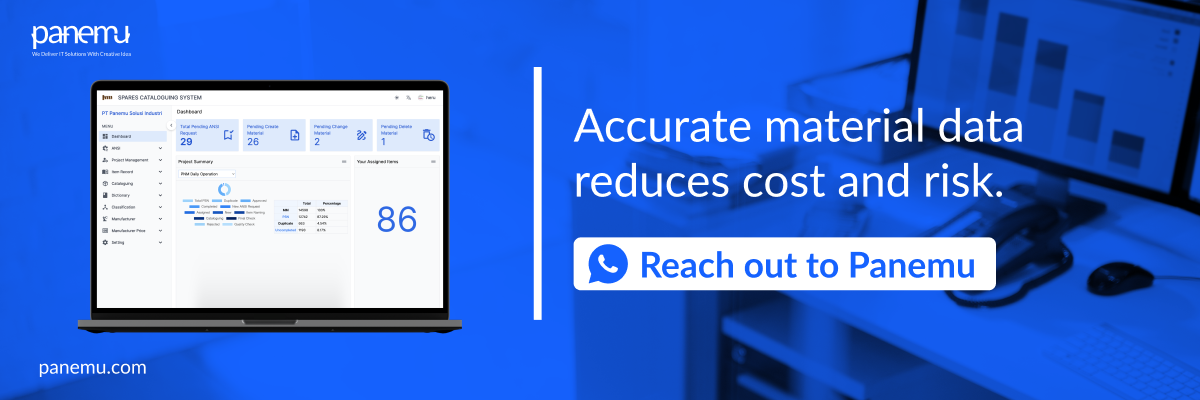
At Panemu, Cataloguing Service projects typically combine proven methodologies, experienced cataloguing professionals, and supporting technologies such as SCS® to improve data quality at scale. The focus remains on delivering practical outcomes that support procurement, inventory management, maintenance, and supply chain operations.

What a Structured Cataloguing Project Delivers
Enhanced Searchability. Standardised material records enable users to locate information quickly and accurately. This improves procurement efficiency and reduces time spent searching for existing items.
Improved Supplier Communication. Clear and consistent specifications reduce ambiguity and accelerate supplier responses, supporting faster sourcing and procurement activities.
Greater Inventory Visibility. Standardised records improve transparency across warehouses, locations, and business units. Supply chain teams gain a more accurate understanding of available inventory.
Stronger Planning Accuracy. Reliable material data improves forecasting, replenishment planning, and demand visibility. Better information supports better decisions.
Long-Term Governance. Sustainable cataloguing programmes establish data standards that maintain quality as new materials are introduced into the organisation.
These outcomes create benefits that extend far beyond procurement departments. Maintenance teams, warehouse operations, inventory planners, and finance functions all gain value from improved data quality.
Material Master Data as a Competitive Advantage
Many organisations view material master data as an administrative requirement. High-performing organisations view it differently.
They recognise that consistent material data supports faster decision-making, stronger supplier relationships, and more efficient supply chain operations.
In industries such as mining, oil and gas, power generation, manufacturing, and heavy industrial operations, even small improvements in procurement efficiency can generate substantial financial impact. Reducing delays, improving inventory visibility, and increasing supplier responsiveness all contribute to stronger operational performance.
Importantly, these outcomes are difficult to achieve when material data remains inconsistent.
A well-governed material master database provides a common language across procurement, supply chain, maintenance, warehousing, and supplier networks. It creates alignment, reduces ambiguity, and supports better collaboration across the entire supply chain ecosystem.
This is why leading organisations increasingly treat Material Master Data Governance as a strategic initiative rather than a back-office activity.
Conclusion
Supplier collaboration is often discussed in terms of partnerships, communication strategies, and commercial agreements. While these factors matter, the foundation of effective collaboration is much simpler.
Suppliers respond better when they receive clear, accurate, and stable material information.
Consistent material master data reduces uncertainty, accelerates procurement processes, improves inventory visibility, and strengthens planning accuracy. It enables suppliers to respond more confidently and helps organisations build more reliable supply chain operations.
For Supply Chain Managers, improving supplier collaboration may not require a new system or a major transformation programme. In many cases, it begins with improving the quality and consistency of the material data already sitting inside existing ERP, EAM, and procurement systems.
Is Your Material Data Helping Suppliers—or Slowing Them Down?
Before investing in another supply chain optimisation initiative, it may be worth asking a simpler question.
Can your team confidently trust the Material Master Data used to communicate with suppliers every day?
When material descriptions are inconsistent, specifications are unclear, and duplicate records remain hidden, procurement cycles slow down, inventory visibility becomes limited, and planning decisions become more difficult than they should be.
Often, the challenge is not the ERP platform.
It is not the procurement process.
And it is not the capability of the supply chain team.
The real issue frequently lies in the quality, governance, structure, and searchability of the Material Master Data behind those processes.
That is why Panemu helps organisations understand the true condition of their Material Master Data through complimentary consultation and data analysis. Through our Cataloguing Service expertise, we identify hidden data quality issues, assess cataloguing maturity, and provide practical recommendations to strengthen procurement, inventory management, supplier collaboration, and end-to-end supply chain performance.
Because stronger supplier relationships begin with stronger data.
And some of the biggest supply chain improvements come from seeing clearly what already exists inside your data.
Could your Material Master Data be strengthening supplier collaboration—or quietly creating friction across your supply chain?
We invite you to schedule a complimentary consultation or submit a sample of your Material Master Data for a free assessment and analysis.
Learn more at: https://panemu.com/cataloguing-service
You can also explore Panemu’s broader Material Master Data and cataloguing initiatives to understand how structured data governance supports procurement, maintenance, and supply chain excellence across capital-intensive industries.