In asset-intensive industries, Maintenance, Repair, and Operations (MRO) depend on more than tools and workforce — they rely heavily on accurate, consistent, and accessible material data. Without a well-structured material catalog, even the most advanced ERP or maintenance systems struggle to deliver operational efficiency.
Material cataloguing is not just an administrative task. It forms the foundation of all MRO data management, ensuring that every part, tool, and consumable can be identified, located, and used effectively across multiple systems and locations.
Why Consistent Material Data Matters
Maintenance and procurement teams face daily challenges when material records are incomplete, duplicated, or inconsistent. Some common issues include:
- Multiple codes for the same item across sites
- Inconsistent part descriptions and technical attributes
- Discrepancies in units of measure
- Missing classification linking materials to specific assets
These inconsistencies lead to operational inefficiencies, increased downtime, overstocking, and unnecessary emergency procurement. According to a study by Aberdeen Group, organisations with poor material data management experience up to 20% higher MRO costs, much of which stems from duplicated records and slow parts retrieval.
How Material Cataloguing Builds a Reliable Foundation
Material cataloguing involves standardising, classifying, and enriching material data so that it becomes a single source of truth across departments and sites. Key benefits include:
- Accurate identification: Each part has a unique code and description, reducing confusion and duplicate records.
- Cross-system usability: Standardised data can be shared between ERP, maintenance, procurement, and warehouse systems without loss of accuracy.
- Clear asset linkage: Every material is associated with the equipment or process it serves, enabling planners to forecast demand and schedule maintenance effectively.
- Improved reporting and analytics: Clean data supports meaningful KPIs, inventory optimisation, and cost control.
Benefit | Impact on Operations |
Reduced duplicate orders | Lower procurement costs and fewer overstock issues |
Faster maintenance response | Higher uptime and reliability |
Simplified audits | Better financial and regulatory compliance |
Improved cross-functional collaboration | Fewer errors and miscommunications |
Material Cataloguing in Multi-Location Operations
For organisations operating across multiple sites, material consistency becomes even more critical. Differences in local practices or system configurations can result in the same material being recorded differently, leading to delays and stock mismanagement.
According to data from the World Economic Forum, companies with standardised master data across locations achieve up to 15% faster maintenance turnaround, primarily due to reduced search time for parts and fewer emergency procurement incidents.
Material cataloguing ensures that the same material reference is used everywhere, providing visibility, traceability, and consistency regardless of geography.
Linking Catalogued Materials to MRO Efficiency
The connection between material cataloguing and operational efficiency is direct:
- Planning: Maintenance planners can schedule tasks with confidence, knowing parts will be available.
- Procurement: Buyers consolidate demand based on standardised codes, securing better pricing and delivery terms.
- Inventory Management: Warehouse teams can locate parts quickly, reducing time spent on searches or stock adjustments.
- Analytics: Accurate data enables better forecasting, cost allocation, and reliability analysis.
In practice, organisations with a robust cataloguing process report fewer than 5% stock discrepancies, compared with industry averages of 15–20% in companies without structured material data.
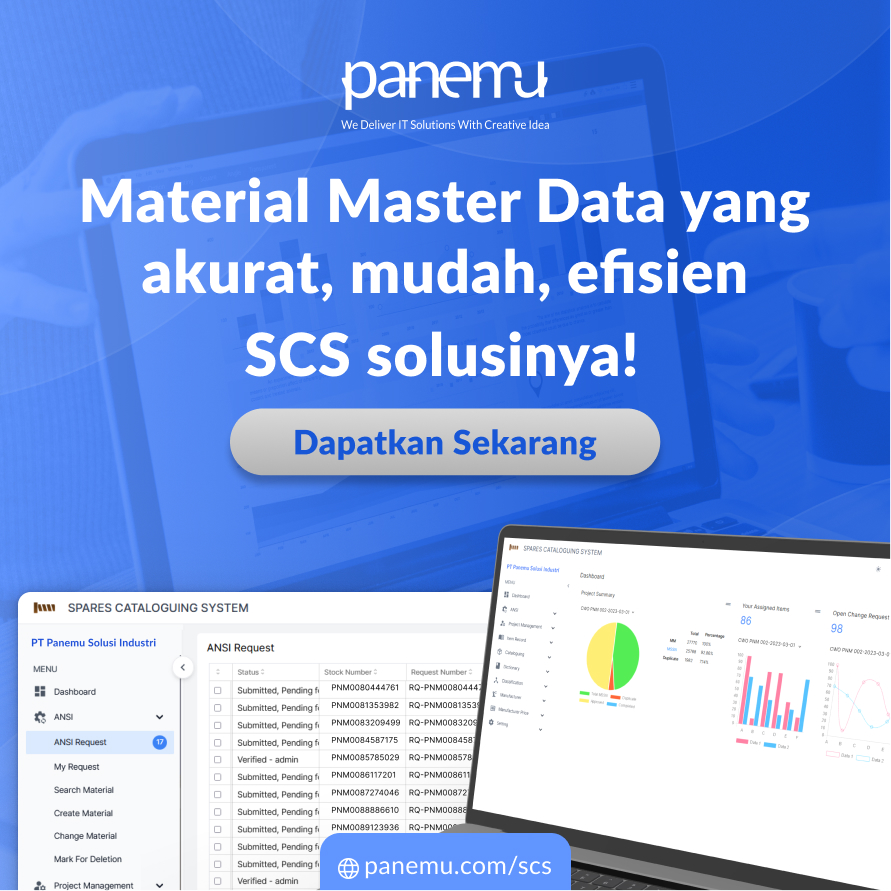
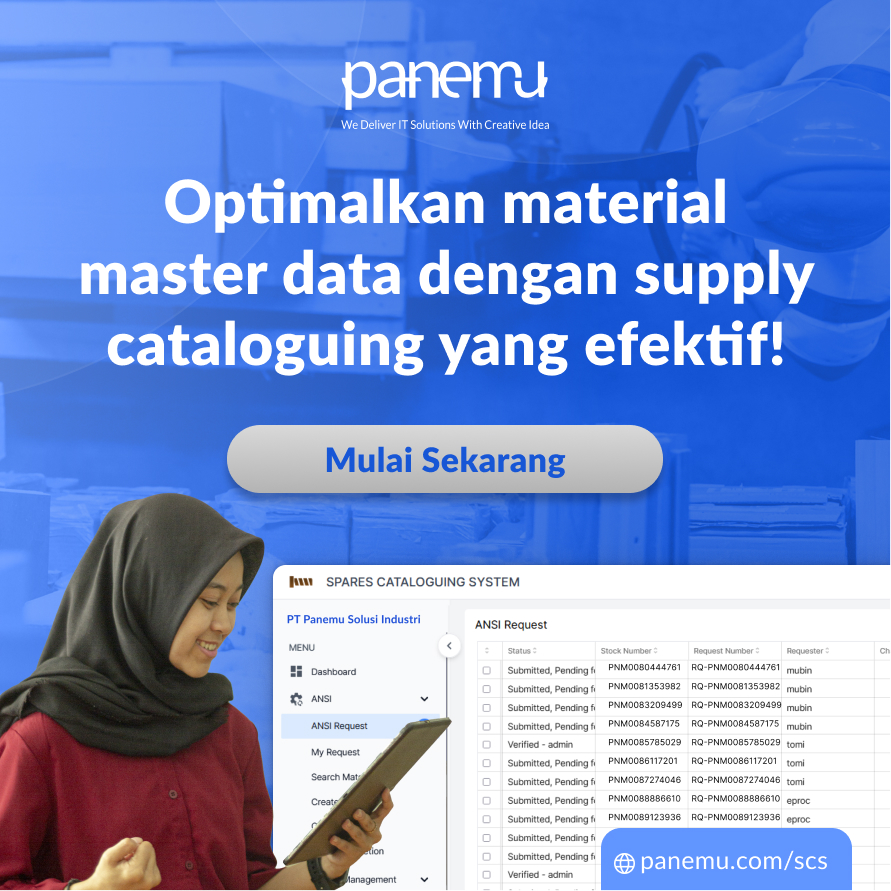
Panemu as Your Partner in Building MRO Data Foundations
While many companies plan to improve material cataloguing internally, building and maintaining a skilled team is complex. Recruiting, training, and retaining professionals, along with sustaining governance standards, can be costly and time-consuming.
Partnering with Panemu provides a more efficient and reliable solution:
- Panemu brings trained and experienced specialists in material cataloguing and MRO data management.
- Standardisation and governance frameworks are implemented faster, reducing operational disruption.
- Organisations save costs on internal resources while ensuring high-quality, consistent material data.
Transforming Material Data into Operational Value
Material cataloguing is more than a housekeeping exercise — it is the foundation of efficient, reliable, and cost-effective MRO operations. Clean, standardised, and well-governed data ensures parts are available when and where they are needed, maintenance schedules are met, and operational performance is optimised.
For organisations planning to improve material cataloguing, partnering with Panemu is a strategic choice. Not only does it accelerate implementation, but it also guarantees access to a professional, experienced team that can deliver consistent results across all sites and systems.
By establishing a strong material data foundation, companies can turn MRO data from a fragmented, error-prone asset into a reliable tool that supports operations, reduces costs, and drives long-term performance.