In asset-intensive industries, maintenance is more than a task, it’s a discipline of reliability. Yet, even the most advanced maintenance strategies lose effectiveness when built on poor-quality data. Every decision, from spare part scheduling to asset life prediction, depends on the integrity of the underlying information. And at the heart of this integrity lies one element often overlooked: data quality.
When organizations talk about maintenance efficiency, they usually highlight predictive analytics, advanced monitoring, or automation systems. However, these technologies only perform as well as the data feeding them. Without structured, accurate, and harmonized material cataloguing, even the best maintenance system becomes a source of confusion, delays, and waste.
The Foundation of Maintenance Efficiency: Data
Efficient maintenance starts with knowing what you maintain and what materials support it. An engineer cannot perform proactive maintenance if spare parts are mislabeled, duplicated across systems, or missing critical attributes. The result is a reactive environment, maintenance teams spend more time locating correct components than repairing assets.
Consider this: an organization might own hundreds of pumps, each requiring specific seals, bearings, and lubrication grades. Without a unified material master data system, these materials may appear under inconsistent names like “BRG 6205 ZZ,” “Bearing 6205Z,” or “BALL BRG 6205-ZZ.” The system cannot distinguish them as the same item, leading to duplicate stock, surplus purchase orders, or even downtime waiting for critical parts.
This is where data quality becomes the hidden driver of maintenance performance. The cleaner and better-structured your material data, the faster and more confidently maintenance work proceeds. Clean data also fuels accurate planning, reduces working capital tied in inventories, and supports a shift from reactive to proactive maintenance.

Material Cataloguing: Turning Chaos into Clarity
The process of material cataloguing transforms scattered, inconsistent material records into a well-organized library of standardized items. It’s not just a clerical function, it’s a strategic initiative that unlocks operational excellence. By establishing a clear taxonomy, attribute completeness, and naming consistency, cataloguing gives organizations a single source of truth for all material-related decisions.
A robust material cataloguing framework ensures that:
- Every material is classified accurately based on global standards.
- Duplicate items are consolidated, reducing redundancy.
- Data attributes such as manufacturer, model, specification, and unit of measure are complete and verified.
- The maintenance team, procurement, and inventory share the same material reference language.
This uniformity directly translates into cost efficiency. Procurement can negotiate better because similar items are consolidated under one code. Maintenance can locate components without guesswork. Planners can predict consumption patterns with confidence. The organization, in essence, moves from uncertainty to control.
How Data Quality Drives Proactive Maintenance
Maintenance teams always seek to move from reactive firefighting to predictive care. However, predictive maintenance models require accurate data input to generate valid insights. Poor-quality master data can corrupt analysis, causing teams to mistrust dashboards and revert to manual judgment. Reliable MDM (Master Data Management) changes this dynamic completely.
When material data is standardized and validated:
- Maintenance histories become traceable to exact material codes.
- Equipment BOM (Bill of Materials) links correctly to inventory.
- Spare part failure trends can be analyzed accurately.
- Procurement and maintenance align under shared performance metrics.
This structured data foundation allows organizations to transition confidently toward proactive maintenance, where actions are based on evidence, not assumptions.
The Realistic Road to Data Quality Improvement
Building a high-quality data framework is not a one-time clean-up, but a sustained discipline. Many organizations begin with enthusiasm but fail to maintain data hygiene over time. A realistic approach includes three fundamental pillars:
- Diagnosis and Mapping: Understand the current data landscape, identify duplicates, incomplete records, and non-standard naming conventions.
- Standardization and Governance: Apply metadata structures and international naming standards (like UNSPSC or ISO 8000). Implement workflow rules ensuring every new material follows the same classification.
- Continuous Stewardship: Data quality must be maintained just as equipment is maintained. Define clear ownership, establish reporting metrics, and empower data stewards to enforce consistency.
These steps create a living data environment, where every modification, new entry, or deletion passes through quality gates designed to preserve long-term reliability.
Panemu’s Approach: Data Quality as a Service
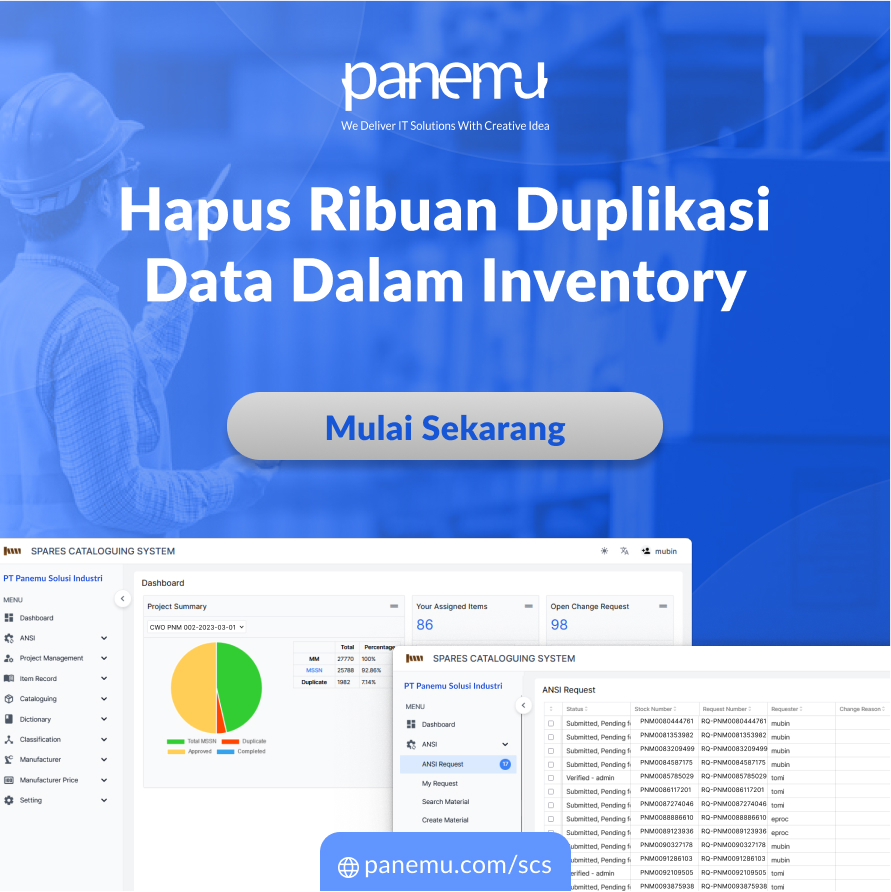
At Panemu, we see data not as an administrative burden but as a business asset. Our methodology focuses on material cataloguing and MDM enhancement as the practical driver of maintenance efficiency. We collaborate with organizations to clean, enrich, and unify their material data, turning complexity into clarity.
Our approach combines smart automation with expert curation:
- Automated cleansing tools detect duplicates and non-standard items across large datasets.
- Taxonomy and classification experts apply consistent naming and attribute standards aligned with operational needs.
- Governance models ensure the process is sustainable, so improvements are not lost over time.
- Integration with maintenance systems connects data quality improvements directly to maintenance workflows and planning reliability.
In our experience, organizations often realize measurable benefits shortly after the implementation phase:
- Reduction in duplicate stock keeping units (SKUs) by 20–50%.
- Faster maintenance response due to easier material identification.
- Decrease in inventory value while maintaining service levels.
- Higher reliability of asset performance analysis.
These are not theoretical outcomes, they are the tangible impact of good data.
A Catalyst for Partnership and Long-Term Efficiency
Beyond systems and processes, the real advantage comes from partnership. Many companies acknowledge that they need better data but struggle to allocate internal resources to achieve it. That’s where Panemu stands apart. Our focus is not just cleaning data once; it’s building frameworks that sustain quality and empower your maintenance teams for years.
Panemu’s services in material cataloguing and asset master data management are designed around operational realism. We understand the tension between ongoing operations and data projects, so we adapt our approach to minimize disruption while delivering long-term results. Whether your goal is to consolidate multiple ERP systems, optimize spare parts inventory, or elevate maintenance reliability, Panemu provides both the technology and the experience to make it happen.
Seeing Data as a Strategic Lever
High-quality data is an invisible engine, it doesn’t make noise, but it drives everything. When organizations treat data as a strategic lever, not just an administrative necessity, maintenance evolves into a precision function. Operational teams stop firefighting and start delivering planned, evidence-based interventions.
That transformation doesn’t require futuristic technology or massive investment. It starts by fixing the foundation, your material catalogue.
And this is where your maintenance transformation begins: by ensuring that every material name, code, and attribute is trusted, traceable, and optimized for decision-making.
When maintenance operates on quality data, efficiency is no longer an aspiration, it becomes a system behavior.
It’s Time to Make Maintenance Simpler, Smarter, and Sustainable
In the end, organizations that prioritize material cataloguing and MDM quality see more than improved system reports, they experience operational agility. They reduce downtime, control inventory costs, and ensure every maintenance action is executed with confidence.
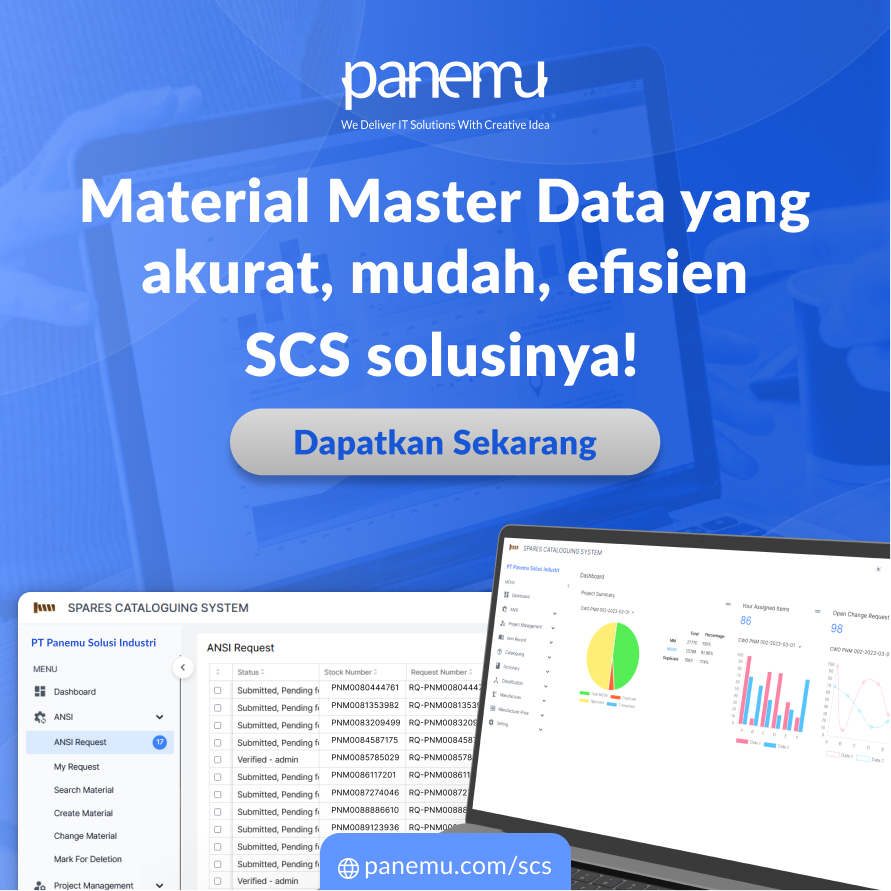
If you’re ready to transform your maintenance ecosystem through the power of clean, structured, and reliable data, Panemu is your partner in that journey.
Visit panemu.com today and discover how our expertise in material cataloguing and data-driven maintenance can help your organization operate with greater precision and efficiency.
Because with the right data, maintenance doesn’t just run, it performs.