In the oil and gas (O&G) world, reliability is everything. Operations stretch across offshore platforms, pipelines, and refineries, each site running under immense pressure to maintain uptime and safety. Yet within this complexity, one subtle but costly inefficiency hides in plain sight: excessive spare parts inventory.
Every company knows the tension between reliability and cost. On one hand, maintenance teams want spare parts immediately available; on the other, finance leaders push to cut non-moving inventory. The key question is not whether to hold spares, but which ones truly add value. This is the essence of spares rationalization, a structured approach to balance reliability with cost efficiency.
Understanding the Real Problem Behind Spare Parts Stock
Most oil and gas operators accumulate years of spare parts data across several systems, sites, and business units. Materials get created under different names, descriptions vary by supplier, and many items stay in warehouses long after the associated equipment is retired. The result? Thousands of duplicate or obsolete SKUs taking up capital and warehouse space.
A typical medium-sized O&G operator might manage over 100,000 individual SKUs. Studies show that 30–50% of those items are duplicates, over-specified, or rarely used. This doesn’t just mean wasted money on storage, it creates confusion and slows maintenance execution. Teams spend time searching, validating, or substituting parts that should have been rationalized years ago.
Why Reducing SKUs Isn’t as Simple as Cleaning Data
Spares rationalization goes far beyond deleting materials from a system. The challenge is strategic, it requires integrating technical, operational, and commercial perspectives. Each line item must be evaluated not only for redundancy, but also for its role in critical operations. One missing part at the wrong time can shut down production worth millions.
The key question becomes: How do we remove unnecessary stock while guarding against downtime risk?
That’s where Panemu’s approach delivers measurable and reliable outcomes.
Panemu’s Balanced Approach to Spares Rationalization
At Panemu, we understand the complexity of O&G maintenance data. Our material cataloguing and MDM (Master Data Management) expertise form the foundation of a precise and controlled spares rationalization process. We approach rationalization as a business optimization exercise, not a data clean-up task.
Our structured framework focuses on three core layers:
- Data Cleansing and Standardization
We start by unifying and cleaning material master data across multiple sources. Using intelligent algorithms and expert verification, we identify duplicates, harmonize descriptions, and align data to international taxonomies. Clean data ensures we’re comparing apples to apples, not apples to unknown parts. - Technical and Criticality Assessment
Every spare is reviewed against asset criticality, equipment lifecycle, and failure behavior. This ensures that removals only target low-risk or duplicate items, preserving reliability for vital operations. Collaboration with maintenance engineers and procurement teams is essential, this is where technical insight meets operational reality. - Optimization and Governance
Once duplicates are eliminated and critical parts confirmed, we establish a governance model to prevent reaccumulation. This includes approval workflows, cataloguing standards, and clear material creation policies, embedding long-term discipline into your supply chain.
The outcome is a smaller, more meaningful catalogue, one that supports reliability without tying up unnecessary capital.
Realizing the Benefits: Efficiency You Can Measure
Rationalization directly impacts both operational and financial performance. Based on Panemu’s experience with industrial clients, the benefits extend far beyond warehouse tidiness:
- Inventory cost reduction of up to 30% without affecting reliability.
- Improved maintenance efficiency through easier part identification and selection.
- Fewer procurement delays, as teams work with verified, standardized materials.
- Enhanced visibility into true spare part demand across multiple sites.
- Faster decision-making with consistent, searchable material data.
In oil and gas, these improvements translate to real resilience. A rationalized spare inventory shortens response times during critical maintenance events and frees capital for productivity-enhancing investments.
The Importance of Material Cataloguing in Rationalization
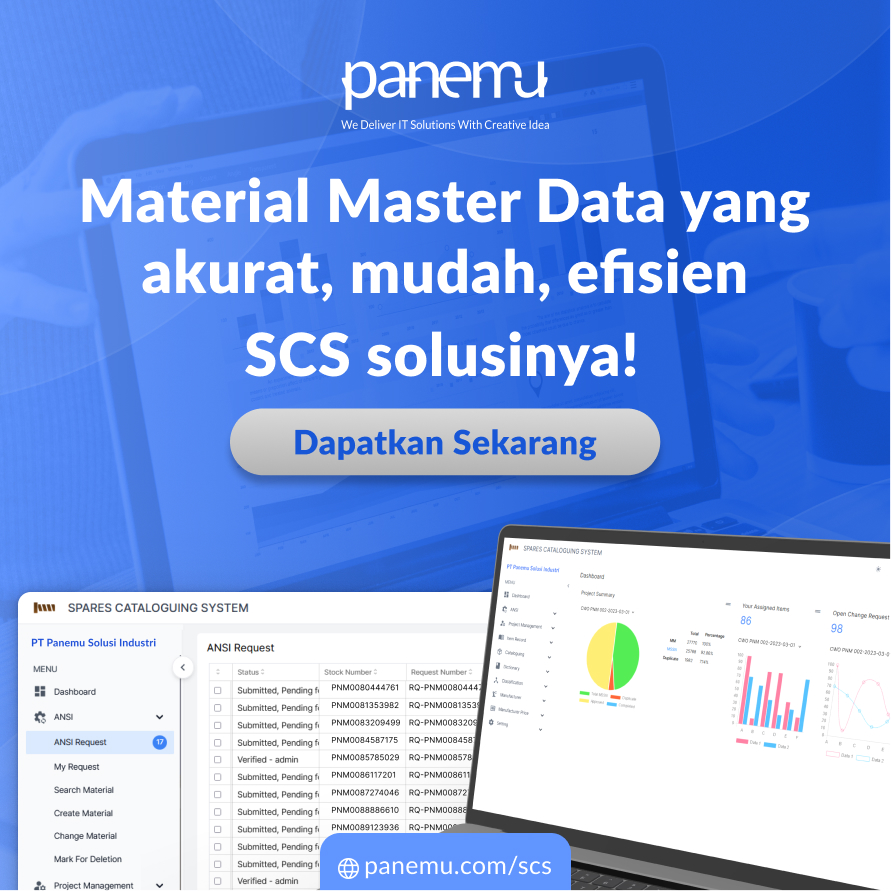
It is impossible to achieve effective rationalization without strong material cataloguing discipline. Cataloguing is the foundation where every rationalization decision stands. It defines how materials are named, classified, and connected to equipment hierarchies. Inconsistent cataloguing often hides duplication and inflates SKU counts.
Panemu’s strength lies in this intersection, where data science meets industry experience. Our cataloguing specialists build a unified material taxonomy tailored to O&G needs, ensuring consistent naming conventions, specification completeness, and data integrity across ERP and CMMS systems. This clarity eliminates ambiguity at the root, reducing future SKU proliferation.
With a strong cataloguing foundation, every part serves a purpose, and every maintenance activity runs smoother.
Balancing Cost and Availability: A Risk-Informed Strategy
A rational spare strategy recognizes that not all parts have equal consequence. Some components are critical to safety or continuous operation and must remain stocked regardless of cost. Others, however, can share interchangeable equivalents across similar assets or be ordered on demand.
Panemu helps clients build a risk-informed inventory model that balances both. By combining reliability data with standardized material information, we can differentiate between "must-have" spares and "nice-to-have" items.
The goal is not to cut aggressively, but to optimize intelligently. Every retained item has a clear justification; every removed item eliminates waste.
Why O&G Companies Choose Panemu
Oil and gas operations are data-heavy, yet downtime-sensitive. What sets Panemu apart is our ability to turn data complexity into operational clarity. We partner closely with clients to ensure rationalization aligns with business priorities, safety, uptime, and cost control.
Our approach integrates:
- Strong technical validation: No part is removed without engineering verification.
- Practical implementation: Changes synchronize with existing ERP workflows.
- Sustainability mindset: Continuous data governance, not one-off projects.
In short, Panemu provides the tools, process, and expertise to sustain high data quality, and therefore, high operational performance.

The Business Case for Spares Rationalization
Every redundant SKU sitting in a warehouse is tied-up cash that provides zero operational value. Beyond cost, excess stock masks inefficiency, it hides poor visibility, weak governance, and disconnected data systems.
By partnering with Panemu, organizations gain a direct line between data quality and reliability performance. Rationalization becomes not a cost-cutting exercise but a strategy for operational agility. The ability to trust data, minimize waste, and respond quickly becomes a competitive advantage in itself.
Turning Data Efficiency into Operational Reliability
Your maintenance excellence begins with clarity. When material data is structured, rationalized, and governed, the maintenance organization runs on precision, not assumptions. That clarity ripples across procurement, planning, and operations, ensuring every decision supports uptime and cost efficiency.
If your spare parts database feels out of control, or if inventory reduction efforts have struggled without long-term results, it’s time to rethink the foundation.
Visit panemu.com to discover how Panemu’s spares rationalization and material cataloguing services empower oil and gas companies to operate leaner, more reliably, and more intelligently.
Because in complex industries, true efficiency starts with data you can trust.